
Covid 19 has held the world hostage for the last one and a half years, and its effect in the rural economy has been devastating. During the onslaught of the second wave of COVID-19, over 126 million people lost their jobs; 90 million people among them are daily wagers, of which 97% are from rural India. A daily wage worker earns by doing odd jobs like pushing loaded carts/ vans to earn their daily wages. When the country was in lockdown, the wage earners lost their only source of income. The challenges faced by the rural communities have further increased.
 Hardship faced by Rural Households
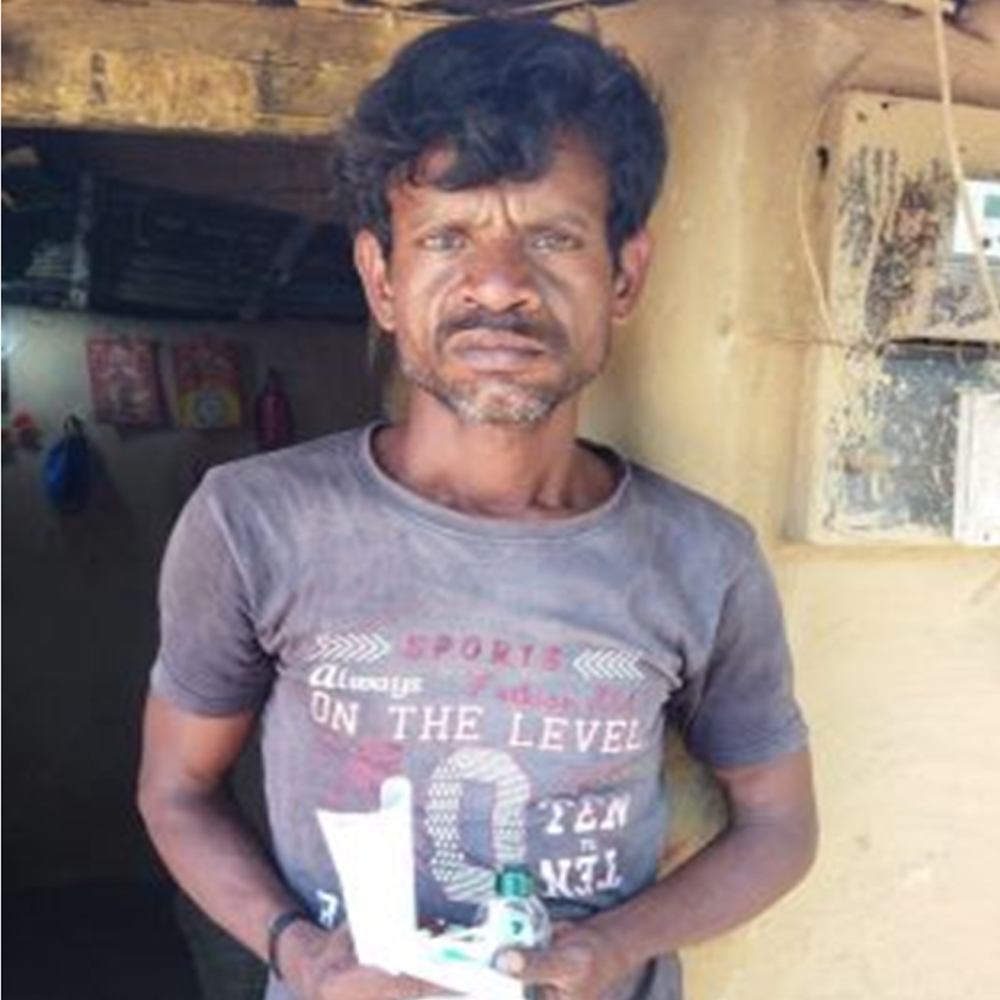
Puran Das is a 48 years old cycle repairer in a small village of Giridih. He repairs cycles from his home because his health does not permit him to travel, and to open a shop was beyond his meager means. However, if he had a shop where he could have some fixed daily customer flow, he has to wait for a whole day to get a handful of customers to earn as low as Rs 20-30/ day.
Puran with his wife and three children were barely making ends meet with this minimal income. But the pandemic has made the situation more difficult. There are no customers because of the lockdown, which means no money at the end of the day.
The family is struggling to provide food for themselves hence equipping themselves with the covid prevention kits didn’t cross their minds.
Hardship faced by Rural Households
Puran Das is a 48 years old cycle repairer in a small village of Giridih. He repairs cycles from his home because his health does not permit him to travel, and to open a shop was beyond his meager means. However, if he had a shop where he could have some fixed daily customer flow, he has to wait for a whole day to get a handful of customers to earn as low as Rs 20-30/ day.
Puran with his wife and three children were barely making ends meet with this minimal income. But the pandemic has made the situation more difficult. There are no customers because of the lockdown, which means no money at the end of the day.
The family is struggling to provide food for themselves hence equipping themselves with the covid prevention kits didn’t cross their minds.
 It would help if Puran’s family could learn how to maintain social distancing within their surroundings. However, he is aware of the covid situation. Puran needed proper information on testing and vaccination drives. While interacting with Puran, he stated that “We have no idea where they are organizing the vaccination camp. We do not step out and are not able to get any information about anything”.
According to a sample study from the Centre of Science and Environment, the rural districts evidenced almost 52% of mortality rate and 53% of the new cases.
Requirement of Awareness Drive in Rural India
In rural India, only 13 percent have been vaccinated, which indicates the urgent need to drive the vaccine rollout. Inadequate testing is a serious concern to measure the coronavirus infection rates and launch the targeted response to prevent it from spreading. Rapid Response Teams are responsible for door-to-door visits where health workers would make the rural household aware of the covid symptoms, prevention protocol, vaccinations, check body temperatures, oxygen saturation levels, and medicines.
Raising awareness through the campaign of a massive public outreach should be among the first steps in its fight against COVID-19.
Previously India has conducted successful campaigns on public information for diseases like polio, HIV/AIDS, and leprosy. A large-scale campaign needs to be launched across the country, using all the communication mediums— television, radio, newspapers, and door-to-door campaigns by health workers/ coordinators. At present, this awareness campaign is urban biased information promoted by the government through television and radio.
It would help if Puran’s family could learn how to maintain social distancing within their surroundings. However, he is aware of the covid situation. Puran needed proper information on testing and vaccination drives. While interacting with Puran, he stated that “We have no idea where they are organizing the vaccination camp. We do not step out and are not able to get any information about anything”.
According to a sample study from the Centre of Science and Environment, the rural districts evidenced almost 52% of mortality rate and 53% of the new cases.
Requirement of Awareness Drive in Rural India
In rural India, only 13 percent have been vaccinated, which indicates the urgent need to drive the vaccine rollout. Inadequate testing is a serious concern to measure the coronavirus infection rates and launch the targeted response to prevent it from spreading. Rapid Response Teams are responsible for door-to-door visits where health workers would make the rural household aware of the covid symptoms, prevention protocol, vaccinations, check body temperatures, oxygen saturation levels, and medicines.
Raising awareness through the campaign of a massive public outreach should be among the first steps in its fight against COVID-19.
Previously India has conducted successful campaigns on public information for diseases like polio, HIV/AIDS, and leprosy. A large-scale campaign needs to be launched across the country, using all the communication mediums— television, radio, newspapers, and door-to-door campaigns by health workers/ coordinators. At present, this awareness campaign is urban biased information promoted by the government through television and radio.
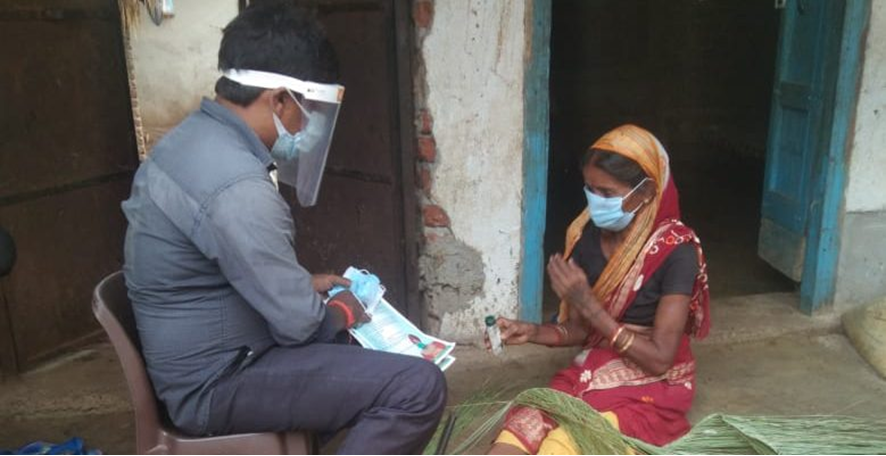 We reach out to rural households based on backward or tribal lifestyles and provide Covid protection kits in vernacular languages.
Mongia Green Foundation is sensitizing communities and families like Puran on the need for mass vaccination and the Covid Appropriate Behavior (CAB) by visiting the household’s door-to-door. It has also taken the initiative to provide COVID relief kits and home isolation kits to the people in the rural areas suffering from corona symptoms. We wish to make the villages Covid Free one at a time. Support Rural Communities to equip themselves against Covid.
We reach out to rural households based on backward or tribal lifestyles and provide Covid protection kits in vernacular languages.
Mongia Green Foundation is sensitizing communities and families like Puran on the need for mass vaccination and the Covid Appropriate Behavior (CAB) by visiting the household’s door-to-door. It has also taken the initiative to provide COVID relief kits and home isolation kits to the people in the rural areas suffering from corona symptoms. We wish to make the villages Covid Free one at a time. Support Rural Communities to equip themselves against Covid.
Puran Das (cycle repairer)
It would help if Puran’s family could learn how to maintain social distancing within their surroundings. However, he is aware of the covid situation. Puran needed proper information on testing and vaccination drives. While interacting with Puran, he stated that “We have no idea where they are organizing the vaccination camp. We do not step out and are not able to get any information about anything”.
According to a sample study from the Centre of Science and Environment, the rural districts evidenced almost 52% of mortality rate and 53% of the new cases.
Requirement of Awareness Drive in Rural India
In rural India, only 13 percent have been vaccinated, which indicates the urgent need to drive the vaccine rollout. Inadequate testing is a serious concern to measure the coronavirus infection rates and launch the targeted response to prevent it from spreading. Rapid Response Teams are responsible for door-to-door visits where health workers would make the rural household aware of the covid symptoms, prevention protocol, vaccinations, check body temperatures, oxygen saturation levels, and medicines.
Raising awareness through the campaign of a massive public outreach should be among the first steps in its fight against COVID-19.
Previously India has conducted successful campaigns on public information for diseases like polio, HIV/AIDS, and leprosy. A large-scale campaign needs to be launched across the country, using all the communication mediums— television, radio, newspapers, and door-to-door campaigns by health workers/ coordinators. At present, this awareness campaign is urban biased information promoted by the government through television and radio.
We reach out to rural households based on backward or tribal lifestyles and provide Covid protection kits in vernacular languages.
Mongia Green Foundation is sensitizing communities and families like Puran on the need for mass vaccination and the Covid Appropriate Behavior (CAB) by visiting the household’s door-to-door. It has also taken the initiative to provide COVID relief kits and home isolation kits to the people in the rural areas suffering from corona symptoms. We wish to make the villages Covid Free one at a time. Support Rural Communities to equip themselves against Covid.