

Crisis of a visually impaired man in Covid-19
In the wake of the COVID-19 pandemic, serious mobility challenges resulting in loss of livelihood have pushed them further towards marginalization and severely dented the chances of survival. People with physical disabilities encounter additional challenges while carrying out daily life in the community due to COVID-19.
Persons with disabilities have higher healthcare needs than other people in the community. They are vulnerable to the impact of low-quality or inaccessible healthcare services than others as they lack both standard necessities and need linking with imparity.
People with disabilities are at Risk
The physically disabled cannot reach near the tap to wash their hands vigorously. They rely on others for daily living (family/friends) find themselves without support due to movement restrictions and physical distancing measures. Leaving them at high risk without access to food, medicine and preventing them from carrying out basic daily activities. They have a higher risk of health issues such as diabetes and hypertension, which are high-risk factors for COVID-19 mortality. Therefore, people with disabilities need more help than the rest of the population in the face of a pandemic.
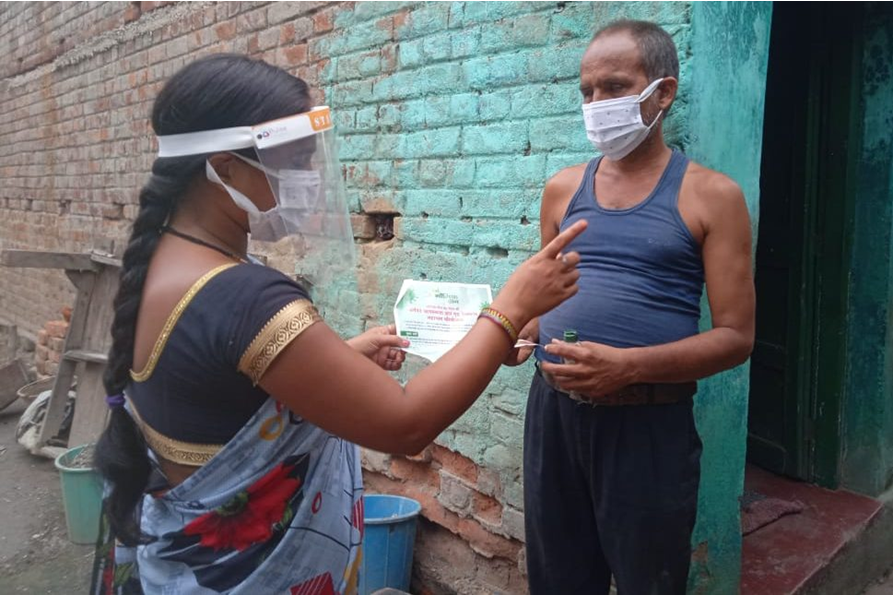
During a routine campaign, session to create awareness and disseminates messages on taking preventive measures against COVID-19 at Giridih, Jharkhand. Mongia Green Foundation team met a 45-year-old man who is blind from the age of 12 years.
Blindness and visual impairment depend upon sensation for most of their daily activities, either by touching or hearing. They need to hold the hand of an attendant to move around. They cannot see or read any message. Therefore, they are not aware of most of the things that are circulating around about the covid virus infection. Someone has to elaborate on the things that are going around. Even they cannot practice social distancing unless they are accessible to the devices like white cane, i.e., keeping a safe distance using a white cane.
 Problems faced by Ashok and his Family in Covid 19
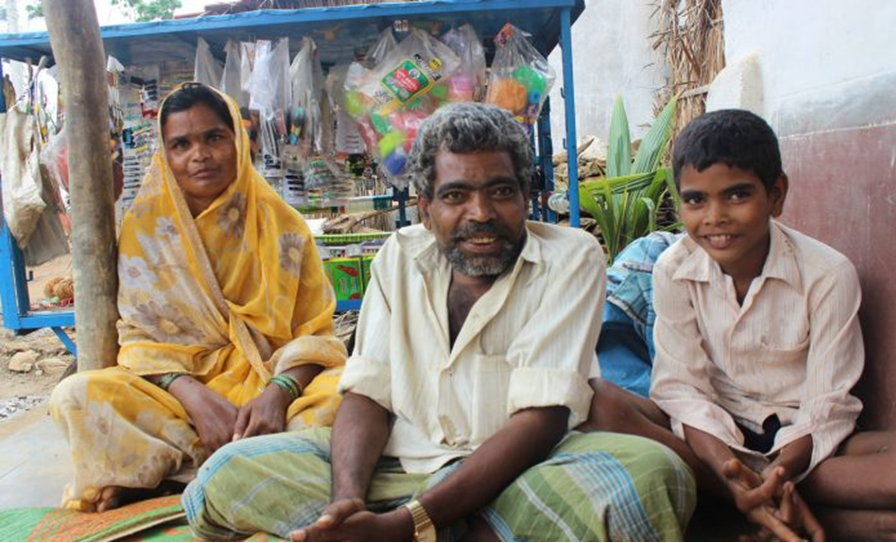
Ashok Sao, a 45-year-old resident from a small village called Kalyandih, Pachamba in Giridih. Ashok was not visually impaired when he was born; he lost his eyesight at the age of 12. Since then, he has been facing great difficulties in his day-to-day life.
Internally displaced persons with disabilities like Ashok have been victims of loss of eyesight, making it harder for them to maintain their livelihoods, amongst other challenges. Moreover, routine health needs are not provided to them for the lack of health centers, transportation facilities, and money.
Nobody is focusing on their special needs and efforts at reaching out to them. We will fail as a human race if we don’t show a humane response equitably with affirmative action for people with disabilities.
Through the Covid care project implemented by Mongia Green Foundation, Ashok was supported by sensitizing them on Covid appropriate behavior by distributing Covid relief kits and medicines. Ashok is unemployed; his wife sells Charcoal/Coal in the nearby local market, their monthly income is not more than Rs 2000. They do not have any children leaving everything on one woman. The pandemic has affected people like Ashok, leaving them and their families unemployed.
Problems faced by Ashok and his Family in Covid 19
Ashok Sao, a 45-year-old resident from a small village called Kalyandih, Pachamba in Giridih. Ashok was not visually impaired when he was born; he lost his eyesight at the age of 12. Since then, he has been facing great difficulties in his day-to-day life.
Internally displaced persons with disabilities like Ashok have been victims of loss of eyesight, making it harder for them to maintain their livelihoods, amongst other challenges. Moreover, routine health needs are not provided to them for the lack of health centers, transportation facilities, and money.
Nobody is focusing on their special needs and efforts at reaching out to them. We will fail as a human race if we don’t show a humane response equitably with affirmative action for people with disabilities.
Through the Covid care project implemented by Mongia Green Foundation, Ashok was supported by sensitizing them on Covid appropriate behavior by distributing Covid relief kits and medicines. Ashok is unemployed; his wife sells Charcoal/Coal in the nearby local market, their monthly income is not more than Rs 2000. They do not have any children leaving everything on one woman. The pandemic has affected people like Ashok, leaving them and their families unemployed.
 Source: The Epoch Times
Lack of access to health care for Physically Challenged in Covid 19
They are not getting proper food and experience higher stress because they cannot understand what is happening all around them on which they have no control. They are exposed to exploitation, and even more so during a pandemic. People with disabilities have minimal access to opportunities and face widespread discrimination. Other barriers they face include lack of accessible physical environments and transportation and non-adapted means of communication.
Persons with disabilities have historically battled inequalities and lower access to necessities like healthcare and education. For persons with visual impairments, some rely on touch, Covid, and guidelines like social distancing have struck them.
The government and the organizations working with people with disabilities have to make efforts to convert prevention and care messages on COVID into an accessible format. In addition, health facilities should prioritize the needs of people with disabilities over the rest of the population.
Mongia Green Foundation teams are providing the services at the home of the vulnerable. A dedicated helpline has been set up for this so that medical professionals can prescribe medicines according to the symptoms. They will be supplied with masks, sanitizers, and medicine. Please help us to reach out to people like Ashok.
Source: The Epoch Times
Lack of access to health care for Physically Challenged in Covid 19
They are not getting proper food and experience higher stress because they cannot understand what is happening all around them on which they have no control. They are exposed to exploitation, and even more so during a pandemic. People with disabilities have minimal access to opportunities and face widespread discrimination. Other barriers they face include lack of accessible physical environments and transportation and non-adapted means of communication.
Persons with disabilities have historically battled inequalities and lower access to necessities like healthcare and education. For persons with visual impairments, some rely on touch, Covid, and guidelines like social distancing have struck them.
The government and the organizations working with people with disabilities have to make efforts to convert prevention and care messages on COVID into an accessible format. In addition, health facilities should prioritize the needs of people with disabilities over the rest of the population.
Mongia Green Foundation teams are providing the services at the home of the vulnerable. A dedicated helpline has been set up for this so that medical professionals can prescribe medicines according to the symptoms. They will be supplied with masks, sanitizers, and medicine. Please help us to reach out to people like Ashok.
Problems faced by Ashok and his Family in Covid 19
Ashok Sao, a 45-year-old resident from a small village called Kalyandih, Pachamba in Giridih. Ashok was not visually impaired when he was born; he lost his eyesight at the age of 12. Since then, he has been facing great difficulties in his day-to-day life.
Internally displaced persons with disabilities like Ashok have been victims of loss of eyesight, making it harder for them to maintain their livelihoods, amongst other challenges. Moreover, routine health needs are not provided to them for the lack of health centers, transportation facilities, and money.
Nobody is focusing on their special needs and efforts at reaching out to them. We will fail as a human race if we don’t show a humane response equitably with affirmative action for people with disabilities.
Through the Covid care project implemented by Mongia Green Foundation, Ashok was supported by sensitizing them on Covid appropriate behavior by distributing Covid relief kits and medicines. Ashok is unemployed; his wife sells Charcoal/Coal in the nearby local market, their monthly income is not more than Rs 2000. They do not have any children leaving everything on one woman. The pandemic has affected people like Ashok, leaving them and their families unemployed.
Source: The Epoch Times
Lack of access to health care for Physically Challenged in Covid 19
They are not getting proper food and experience higher stress because they cannot understand what is happening all around them on which they have no control. They are exposed to exploitation, and even more so during a pandemic. People with disabilities have minimal access to opportunities and face widespread discrimination. Other barriers they face include lack of accessible physical environments and transportation and non-adapted means of communication.
Persons with disabilities have historically battled inequalities and lower access to necessities like healthcare and education. For persons with visual impairments, some rely on touch, Covid, and guidelines like social distancing have struck them.
The government and the organizations working with people with disabilities have to make efforts to convert prevention and care messages on COVID into an accessible format. In addition, health facilities should prioritize the needs of people with disabilities over the rest of the population.
Mongia Green Foundation teams are providing the services at the home of the vulnerable. A dedicated helpline has been set up for this so that medical professionals can prescribe medicines according to the symptoms. They will be supplied with masks, sanitizers, and medicine. Please help us to reach out to people like Ashok.